Africa: 3 Biggest Risks From US-Iran Shift
Africa faces renewed economic risks as U.S. Secretary of State Rubio's compliance-only Iran stance threatens trade routes, banking channels, and energy imports…
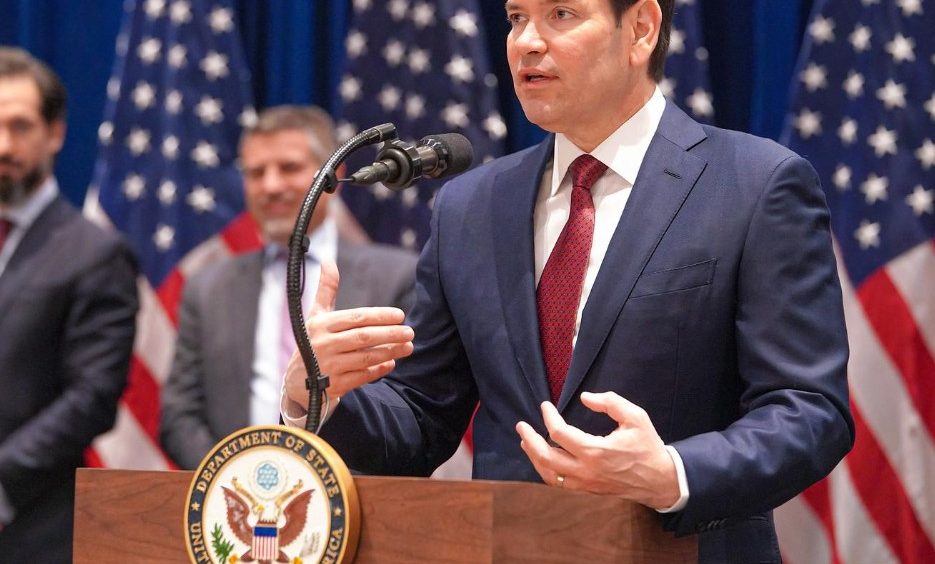 Rubio Says Washington Remains Open to Constructive Negotiations U.S. Reaffirms Support for Diplomacy Based on Compliance
 Ghana and the Netherlands Strengthen Partnership to Combat Transnational Organised Crime
 Focus on Property Tax and Informal Sector to Boost Revenue Prof. Quartey Urges Government
 GoldBod CEO Rejects Minority’s Loss Allegations, Cites GH¢5.44bn Surplus
 Trump and Zelenskiy Set to Hold High-Stakes White House Summit as Washington Revives Peace Push
 Day 1 of the Healing Streams Live Healing Services Opens With Pastor Chris’ Message on “The Gospel of Jesus Christ”
 The Rising Danger of Healthcare Cyber Attacks
 Lt-Gen Sizakhele Dyantyi Appointed as New Western Cape Police Commissioner


Independent. Informed. Always on.
Ghana's Gold Board declared a GH¢5.44 billion surplus for 2025, rebutting Minority Caucus loss allegations with audited financials. The results raise critical questions about state-led gold monetization across Africa.

Key Topics: africa-gold-monetization, state-commodity-boards, ghana-gold-production
Ghana's GoldBod surplus mirrors a broader historical pattern across Africa where state commodity boards have struggled to capture resource value. In the early 2000s, Tanzania's gold sector drew intense criticism when studies revealed negligible fiscal returns despite being one of the continent's largest producers — a failure attributed to weak institutional frameworks and unfavorable mining contracts. GoldBod's reported results represent a significant departure from that model, echoing Botswana's successful state diamond partnership with De Beers, which transformed resource wealth into sustained national development over decades. The key risk remains political entanglement; Nigeria's NNPC before its 2022 restructuring demonstrated how commodity boards caught in partisan disputes saw institutional credibility erode regardless of actual financial performance. If Ghana's audited figures withstand continued scrutiny, the country could establish a continental benchmark for state-managed commodity trading that reshapes how West African nations approach gold monetization.
Africa’s Ghana Gold Board stunned critics by declaring a GH¢5.44 billion surplus for 2025, directly countering Minority Caucus allegations of operational losses. CEO Sammy Gyamfi released audited financial statements in Accra amid a heated mid-year budget dispute.
Ghana ranks among the world’s top gold-producing nations, and a state commodity board posting a surplus of this scale sends powerful signals across international markets. For decades, skeptics have questioned whether government-run resource entities in Africa can deliver measurable fiscal returns without succumbing to mismanagement or corruption.
GoldBod’s audited results challenge that narrative head-on. The agency increased gold purchase volumes, scaled foreign exchange generation, and bolstered the Bank of Ghana’s domestic gold acquisition program — all while operating under tightened margins and falling global prices.
The dispute between GoldBod and the Minority Caucus exposes a deeper friction in African governance — the clash between parliamentary oversight and executive-agency accountability. The allegations surfaced during a politically charged mid-year budget review, raising questions about whether the challenge was driven by genuine fiscal concern or partisan maneuvering.
GoldBod’s decision to publish audited financial statements on its official portal represents an unusual level of openness for a state commodity entity in the region. That transparency may prove more consequential than the surplus itself, especially as international investors and development partners scrutinize institutional credibility across Africa.
CEO Gyamfi confirmed the agency is targeting a repeat performance in 2026 through expanded trading channels and streamlined supply chain oversight. However, the political fallout is far from settled — Afenyo-Markin’s public challenge suggests this debate will intensify as Ghana approaches its next fiscal milestones.
The broader question is whether this model can be replicated. Nations like Mali, Burkina Faso, and the DRC are watching closely as they weigh their own gold monetization strategies against the risks of political interference.
Can Africa’s state-led gold institutions sustain surpluses like this amid volatile global commodity markets, or will political pressures undermine institutional gains? Share your perspective below. #InternationalNews #GM247News
Prepared with AI assistance; Reviewed by the GM247 Editorial Desk.
Found an error or important omission? Email corrections@gm247news.com.
Africa faces renewed economic risks as U.S. Secretary of State Rubio's compliance-only Iran stance threatens trade routes, banking channels, and energy imports…
 Africa News
Ghana and the Netherlands signed a binding 2026 security pact in Accra targeting transnational crime across the continent. The agreement could reshape…
 Africa News
A leading Ghanaian economist is demanding sweeping property tax and informal-sector reform across Africa, warning that low revenue collection traps nations in…