 Africa News
Africa: Shocking G20 Press Ban Sparks Biggest 2026 Row
Journalists covering Africa and the Global South were reportedly barred from the G20 finance meeting in North Carolina, sparking fierce backlash. Press…
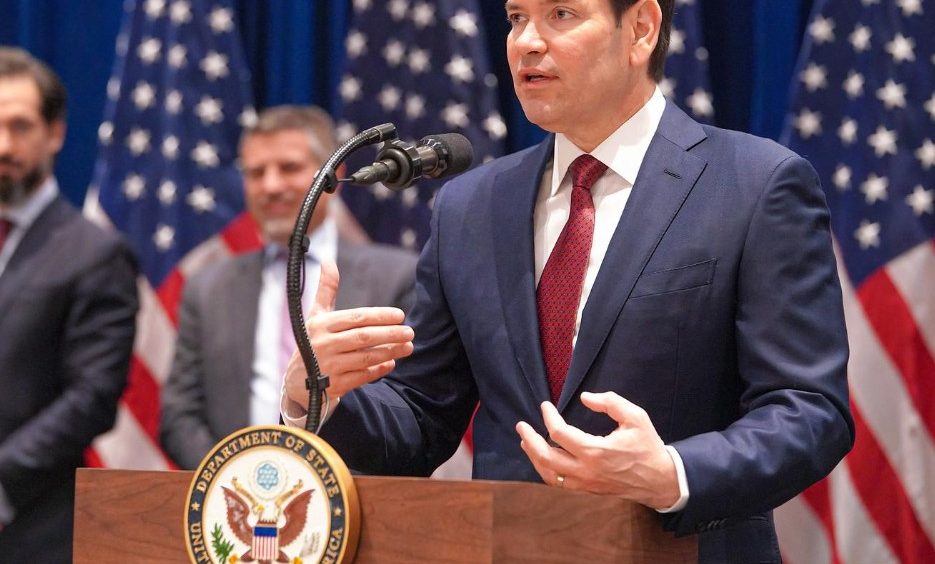 Rubio Says Washington Remains Open to Constructive Negotiations U.S. Reaffirms Support for Diplomacy Based on Compliance
 Ghana and the Netherlands Strengthen Partnership to Combat Transnational Organised Crime
 Focus on Property Tax and Informal Sector to Boost Revenue Prof. Quartey Urges Government
 GoldBod CEO Rejects Minority’s Loss Allegations, Cites GH¢5.44bn Surplus
 Trump and Zelenskiy Set to Hold High-Stakes White House Summit as Washington Revives Peace Push
 Day 1 of the Healing Streams Live Healing Services Opens With Pastor Chris’ Message on “The Gospel of Jesus Christ”
 The Rising Danger of Healthcare Cyber Attacks
 Lt-Gen Sizakhele Dyantyi Appointed as New Western Cape Police Commissioner


Independent. Informed. Always on.
Ghana's Gold Board declared a GH¢5.44 billion surplus for 2025, countering opposition loss allegations with audited financials. The results could reshape how African nations approach state-led gold monetization.

Key Topics: africa-gold-monetization, state-commodity-boards, ghana-gold-production
Ghana's GoldBod surplus mirrors a broader historical pattern where state commodity boards across the continent have struggled to capture resource value. In the early 2000s, Tanzania's gold sector drew intense criticism when studies revealed negligible fiscal returns despite being one of Africa's largest producers — a failure attributed to weak institutional frameworks and unfavorable mining contracts. GoldBod's reported results represent a significant departure from that model, echoing Botswana's successful state diamond partnership with De Beers, which transformed resource wealth into sustained national development over decades. The key risk remains political entanglement; Nigeria's NNPC before its 2022 restructuring demonstrated how commodity boards caught in partisan disputes saw institutional credibility erode regardless of actual financial performance. If Ghana's audited figures withstand continued scrutiny, the country could establish a continental benchmark for state-managed commodity trading that reshapes how West African nations approach gold monetization.
Africa’s Ghana Gold Board reported a stunning GH¢5.44 billion surplus for 2025, directly rebutting opposition loss allegations with audited financials released in Accra during a contentious mid-year budget review in September 2026.
Ghana ranks among the world’s top gold-producing nations. A state commodity board delivering a surplus of this magnitude sends powerful signals across international markets, challenging decades of skepticism about whether government-run resource entities can generate measurable fiscal returns.
GoldBod’s decision to publish audited financials on its official portal represents an unusual level of openness for a state commodity entity in West Africa. That transparency may prove more consequential than the surplus itself, particularly as international institutions and investors scrutinize institutional credibility before committing capital.
The dispute between GoldBod and the Minority Caucus exposes a deeper tension in governance across the continent — the collision between parliamentary oversight and executive-agency accountability. The loss allegations surfaced during politically charged budget proceedings, raising questions about whether genuine fiscal concern or partisan calculation drove the challenge.
Opposition leaders have signaled continued scrutiny despite the audited results. Whether the political fallout damages GoldBod’s credibility or ultimately reinforces its institutional standing remains an open question as 2026 unfolds.
The broader strategic question is whether Ghana’s framework can be replicated. Nations wrestling with gold monetization strategies are weighing Ghana’s approach against the persistent risks of political interference and weak institutional capacity that have historically plagued state-run commodity boards on the continent.
If Ghana’s audited figures withstand sustained scrutiny, the country could establish a continental benchmark for state-managed commodity trading — reshaping how West African governments approach resource wealth capture for decades to come.
Can state-led gold institutions sustain surpluses like this amid volatile global commodity markets, or will political pressures erode institutional gains? Share your perspective below. #InternationalNews #GM247News
Prepared with AI assistance; Reviewed by the GM247 Editorial Desk.
Found an error or important omission? Email corrections@gm247news.com.
Africa News
Journalists covering Africa and the Global South were reportedly barred from the G20 finance meeting in North Carolina, sparking fierce backlash. Press…
Africa News
Lt-Gen Sizakhele Dyantyi takes command of Western Cape policing after devastating gang violence killed 11 in a single weekend. His appointment tests…
 Africa News
The WHO warned from Cairo that cyberattacks now directly threaten patient safety across Africa's digitizing health systems. Emergency partnerships with the ITU…